
Common images and truths of milk and calcium
The image of milk with calcium
In Japan, milk has been widely used for many years with the image that it is rich in calcium and strengthens bones and teeth. Many people believe in this image, and the habit of drinking milk has taken root since childhood. However, there is a big gap between this popular image and the actual scientific facts.
Misconceptions about calcium intake
In fact, it is difficult to effectively get calcium from cow's milk. One of the reasons for this is that many Japan people do not have enough lactase, an enzyme necessary to digest the lactose contained in milk. For this reason, drinking milk often makes your stomach looser. In addition, the calcium contained in milk is said to be difficult to use efficiently in the body.
Actual effects of milk intake
It can happen that the amount of calcium in the body actually decreases after drinking milk. This is called the "milk paradox" and is caused by the sudden increase in blood calcium levels due to the consumption of milk, and the body determines that there is too much calcium and releases calcium from the bones, resulting in excretion as urine.
History of milk culture in Japan
Influence of GHQ in the post-war period
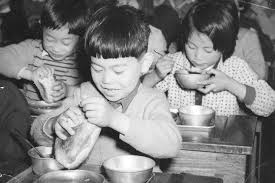
Japan's milk culture changed greatly due to the post-war policies of GHQ (Supreme Allied Commander General Headquarters). After 1945, Japan was facing food shortages, and GHQ began to provide skim milk powder to schoolchildren. This was partly to improve the nutritional status of Japan children, but also to open up markets for surplus wheat and dairy products in the United States.
School Lunch Act and Maternal and Child Health Handbook
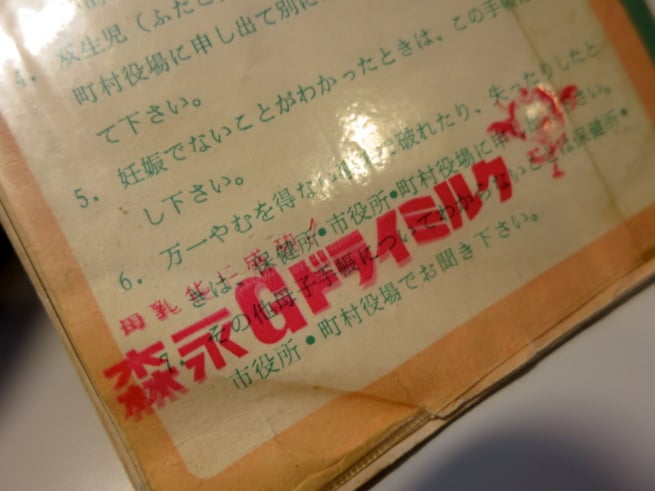
The School Lunch Act, which came into effect in 1954, stipulated that milk should be required for school lunches. This law was based on the policy of GHQ, and the combination of milk and koppe bread became a symbol of school lunches in Japan. In addition, there was an influence of the United States on the spread of the Maternal and Child Health Handbook. Created in 1915 by the National Dairy Council of the United States, the Maternal and Child Handbook was originally created as a PR strategy for the dairy industry and was later introduced to post-war Japan. As a result, the recommendation to drink milk and powdered milk was disseminated through the Maternal and Child Health Handbook.
Why milk is not recommended
Milk paradox
The "milk paradox" is that the concentration of calcium in the blood rises sharply due to the consumption of milk, and the body mistakenly judges that there is an excess of calcium. Releasing calcium from the bones Refers to a phenomenon. As a result, drinking milk can lead to a decrease in the amount of calcium in the body. This contradicts the popular belief that milk makes bones stronger.
Leaky Gut Syndrome
About 80% of the protein in milk is casein, which is difficult for the human digestive system to completely break down. Insufficient degradation of casein It has been shown to cause inflammation in the gut and increase the risk of leaky gut syndrome. Casein can also cause allergies.
Lactose intolerance
About 80% of Japan do not have the enzyme "lactase" that breaks down lactose. Inability to digest lactose contained in milk 。 When lactose intolerant people consume milk, it can cause indigestion and cause diarrhea and bloating.
Carcinogenic risk
Some studies have shown that the consumption of milk and other dairy products may increase the risk of certain cancers, especially breast and prostate cancer. This may be due to hormones and other additives used in milk production.
From the above points, it cannot be said that milk is generally good for health, and it is necessary to be careful when consuming it.
Milk consumption and health effects
Comparison of milk consumption in Japan and Europe and the United States
There is a big difference in milk consumption between Japan and Western countries. In Japan, post-war policies and economic growth led to an increase in milk consumption, while in Europe and the United States it recorded an even higher consumption. This has led to different data on milk and its effects on health.
Milk consumption and the risk of fractures
It is commonly believed that milk makes bones stronger, but in fact the opposite is possible. According to a Harvard University study: The more milk and dairy products you consume, the higher the risk of fractures It is reported. In particular, it has been suggested that the risk of femoral neck fractures is associated with dairy-derived calcium intake. This is consistent with data showing that the incidence of femur fractures in women in Japan is less than one-third that of women in Europe and the United States.
Milk Intake and Bone Health
These findings challenge the conventional notion that milk strengthens bones and prevents osteoporosis. It suggests that high calcium intake in milk is not necessarily good for bone health, on the contrary, it may increase the risk of fractures.
牛乳離れと植物性ミルクへの移行
The trend away from milk in the United States
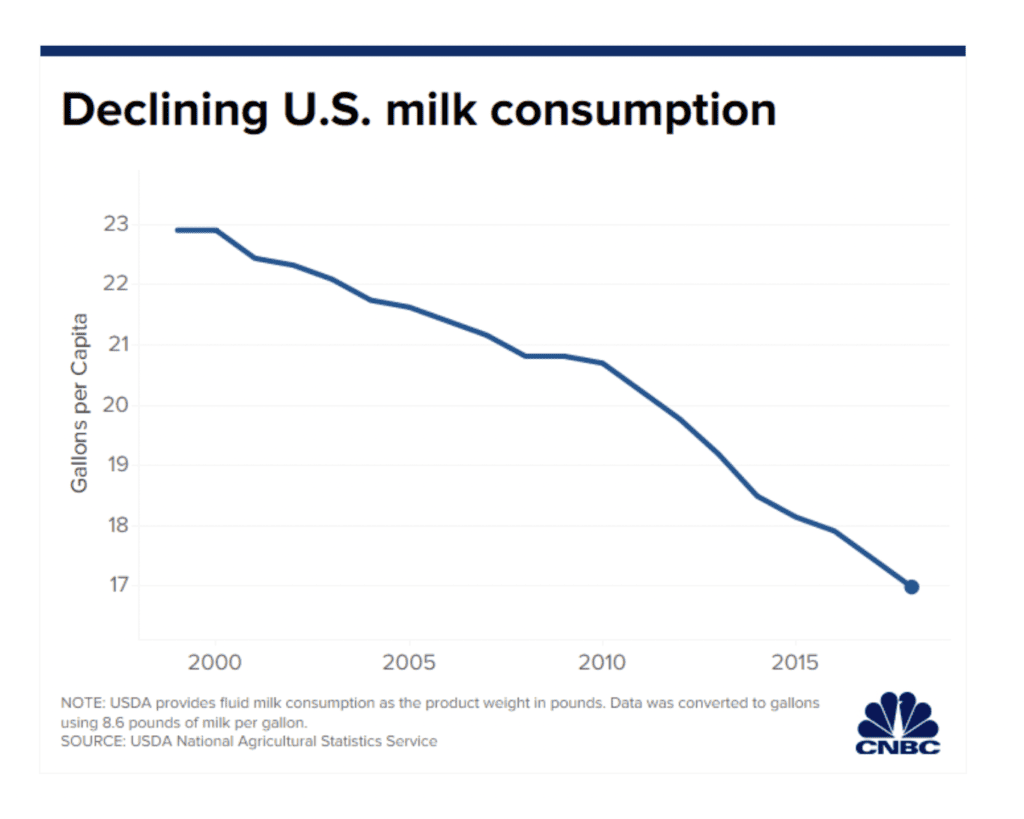
In recent years, milk consumption has been declining in many countries, including the United States. This is due to health and environmental concerns, which are causing consumers to shift from cow's milk to other alternatives. For example, in the United States, milk consumption has declined by about 30% over the past 30 years, and plant-based milks such as soy milk and almond milk account for part of the milk market.
The rise in popularity of plant-based milks
Plant-based milk is becoming increasingly popular as an alternative to cow's milk. These are a good option for lactose-intolerant people and vegetarians, and they also have a lower environmental impact than cow's milk. For example, beef and milk production are considered to have high greenhouse gas emissions, while plant-based milk production is considerably lower.
Consideration for the environment
Environmental impact is another factor that drives the popularity of plant-based milks. In order to reduce greenhouse gas emissions, many people are starting to think about transitioning from cow's milk to plant-based milk. In particular, consumer awareness is expected to change further amid growing concerns about climate change.
Future changes in milk culture in Japan
Transition to milk substitutes
In Japan, too, the transition from cow's milk to plant-based milk is progressing due to increasing health and environmental awareness. Plant-based milk is an attractive option for many consumers because it has no lactose intolerance or allergy concerns, and it also has a low environmental impact.
Predicting the future of milk culture in Japan
Milk consumption in Japan is likely to continue to decline. The demand for milk alternatives is expected to increase further, owing to the increasing health and environmental awareness, especially among the younger generation. In addition, trends in the milk industry in Japan and overseas and advances in scientific research will also change the milk culture in Japan.
The spread of vegetarianism
As a global trend, the population of vegetarianism and veganism is increasing. This trend is also expected to affect Japan, which will lead to a reassessment of milk and dairy product consumption. This can also lead to significant changes in eating habits and food culture.
Conclusion
Summary of the health effects of milk
In this article, we delved into common misconceptions about milk and calcium, the historical background of milk, its health effects, and changing consumption trends. Milk is not necessarily the best source of calcium for everyone, and it has become clear that Japan in particular have lactose intolerance and allergy problems.
Changing consumer attitudes
As consumers, we are healthier when we are more conscious in our food choices.
What role does milk play in your diet? You may want to think about milk and its alternatives. Why not take the step of choosing the right drink for you for a healthy life?